Monday, December 12, 2005

Sacred spaces

In the November issue of the Urbanite (pdf here), Zoë Saint-Paul looked at “The Sacred City,” a topic that we discussed when she was writing the piece, and one that I found provocative once she got me thinking about it. I am always on the lookout for peaceful places in Mobtown, but it doesn’t take long to see that the quiet and the sacred are not one and the same. At the time, I jotted down some notes on the theme and pass them along here, with only a few edits.

separator

What constitutes the sacred? For me, it is something that enables one to feel one’s insignificance: to contemplate death, or the sweep of history, ideals, or one’s place in the world—in short, a feeling of humility. I place a great deal of importance on the divinity of man, however one thinks of that, and so I’m generally drawn towards the intersection, the harmony, of man and nature. (Many find the wilderness a sacred place, but not me—we are frequently reminded of the destructive power of nature.) That leaves one with the chance to catch a bit of the religious impulse, the happy and bittersweet feeling when one is connected to the moment, the place, oneself.

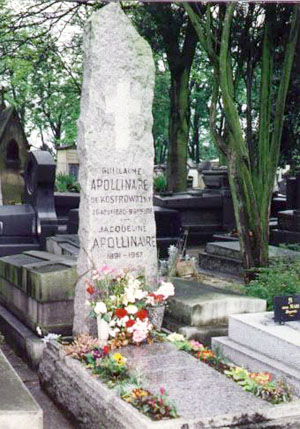
In the early 1980s, I was paying a visit to Père-Lachaise cemetery in northeast outskirts of Paris, searching for the grave of Guillaume Apollinaire, when I came upon a small group standing over his tomb, one of their number—a middle-aged man—reading several of his poems. I observed the rite from a distance, standing in the drizzling rain until they were done before my own visit. When we contemplate great men and women, their works, and their legacy, we may experience the sacred. I remember finding myself on the National Mall one winter evening when virtually no one was around, thinking about the remarkable founders honored there, a wellspring of patriotism.

separator

Silbury Hill, Wiltshire
Silbury Hill, Wiltshire (1985)

[Photo credit: Marilyn Bridges, from Markings: Aerial Views of Sacred Landscapes (Aperture, 1986); this largest man-made hill in Europe reaches 130 feet in height and covers some 5.25 acres. Believed to have been built in four stages beginning in c. 2500 BCE, it is said to be the burial place of King Sil, who was interred sitting on horseback. In fact, it may have served as an astronomical observatory.]

separator

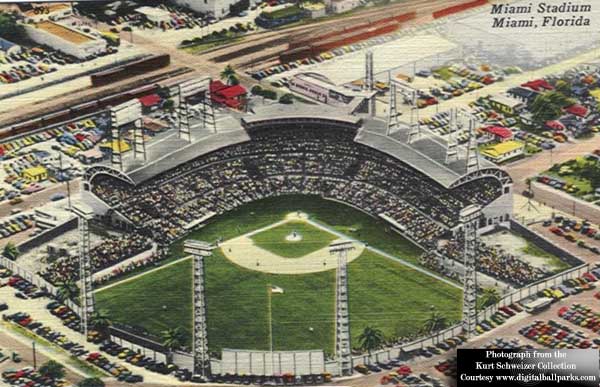
Relative quiet is helpful, but not required. I enjoy being out-of-doors where other people are going about their business, but not engaging me directly. I love the sound of the tugboats in the harbor at Fells Point, of the trains as they make their way through east Baltimore, of (even!) the crowd at the ballpark on a beautiful September evening.

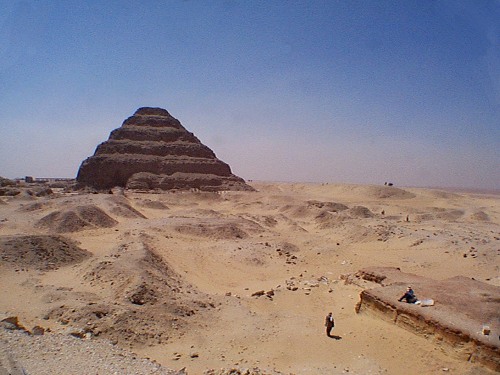
When I was visiting the pyramids at Giza, I was endlessly frustrated at my inability to find peace in what is clearly a magical place—not the crowds, actually—the place is so big that it’s easy to avoid others, at least if everyone is pursuing the same strategy—but they aren’t: folks are hawking camel rides, selling souvenirs, offering to show you around, and they won’t go away. Later in the day, when I was several pyramids down at Saqqara (the “step pyramid”) and a storm was threatening, I [more or less] had the place to myself. Much smaller than Giza, but more personally profound, since I had a little slice of quiet.

A place to sit, or recline, is almost essential.
Physical comfort is essential. No cold!

Familiarity, a sense of being rooted to the place, helps—I’m pretty comfortable in Baltimore, having lived here for most of my adult life (save five years in California). I love Los Angeles, and have the ability to find a sacred place almost anywhere out there (it has more than a little to do with the climate, and the land, and the ocean, but there is also something about the place that makes me happy).

The familiar does not have to be due to direct experience. Folks feel comfortable in religious buildings the world over, and I felt at home in Paris the first time I ever visited, the result of years of middle-school French class indoctrination. I once visited Istanbul based on the purchase of a Victorian travelogue. Sometimes our “fit” with a place can be almost mystical, no?

The strange can be marvelous, but an awesome place is not the same as a sacred one.

Labels: ,

Tuesday, November 22, 2005

The spotted opossum

I happened upon this site that examines the history of exploration of Australia whilst looking for opossum engravings—really!—and was able to establish that the European settlement of the continent began at the time of our constitutional convention (in 1787).

Spotted Opossum
Spotted Opossum, Peter Mazell;
hand-coloured copper engraving
from Voyage of Governor Phillip to
Botany Bay
by Arthur Phillip
(Rex Nan Kivell Collection)

It turns out that Captain James Cook was the first European to discover Australia—did I ever know this?—in 1770, first sighting the southeast coast in March.

He discovered and named Botany Bay, carefully explored and mapped the coast northward, and finally, on Possession Island in Torres Strait, took possession of the whole eastern coast, naming it New South Wales.

(Excerpts from his journals are available on the site.) But the first settlements (for the establishment of a penal colony—decidedly part of my elementary school curriculum) took place decades later while America was debating its new constitution. Arthur Phillip, an admiral in the British navy, led this first expedition, landing in Botany Bay, and began to settle the continent. Phillip’s journals include a wide-ranging justification of the endeavor; an impressive historical survey (natural, anthropological, and otherwise), and an accounting of the young government, such as it was. But all of this is a thinly-veiled excuse to put up an amazing print [inset left] of the spotted opossum, a creature that surely cannot be real, conjured from the feverish imagination of a colonial sailor and amateur natural historian, prefiguring Lewis Carroll.

Labels:

Tuesday, September 20, 2005

St. Eustace, Athanasius Kircher, and wonder

Today is the feast day for St. Eustace, the patron saint for hunters and those in difficult situations; he plays a small role in the literature of wonder, primarily for the lasting fascination of Jesuit scholar Athanasius Kircher with the Roman-general-turned-martyr.

Eustace hart
Detail, The Conversion of St. Eustace
at Mentorella; from Historia
Eustachio-Mariana (1655)

(For those of you who make it to Los Angeles, a very good exhibition on the Baroque polymath—“The World is Bound With Secret Knots: The Life and Works of Athanasius Kircher”—may be found at the exceptional Museum of Jurassic Technology, a stop that should be on any Southland itinerary.) Eustace, then known as Placidus, was tracking a hart when he was confronted by a vision of a crucifix in the stag’s antlers. From Jacobus de Voragine’s The Golden Legend: Readings on the Saints (c. 1260),

Christ then spoke to Placidus through the stag’s mouth, as once he had spoken through the mouth of Balaam’s ass. The Lord said: “O Placidus, why are you pursuing me? For your sake I have appeared to you as this animal. I am the Christ, whom you worship without knowing it. Your alms have risen before me, and for this purpose I have come, that through this deer which you hunted, I myself might hunt you!”

In the autumn of his career, Kircher stepped down from his post at the Collegio Romano, an imposing complex built atop the ruins of the Roman temple of Isis, and began to walk the countryside in support of a “speculative reconstruction of Roman prehistory and physical survey of the contemporaneous landscape,” according to MJT. “It was on one of these walks, in the countryside surrounding Marino, that Kircher stumbled upon the ruins of an ancient church. An inscription near the moldering altar identified the shrine as the site of St. Eustachius’s conversion to Christianity.” [“Eustachius” is an alternate name.]

separator

Often, Kircher is popularly represented as the “last man who knew everything” or the “first postmodern thinker,” but this doesn’t quite capture what was special about him. A mathematician, he was in the business of finding the essence of systems, and forever chasing things like universal language and magnetism, which he saw as a grand unifying force of the physical and emotional spheres (the latter concerned with attraction and repulsion, for instance). Not a genius in the sense the word is usually understood, Kircher was able to see underlying connections between nearly anything, the source of his brilliance (and also his Achilles heel—most of his scholarship would come to be wrong). His most enduring legacy was his museum, a “theatre of nature and art,” and one of the first recognizably modern such institutions: showcased were natural collections and taxonomies and “miraculous objects” intermingled with works of fine art. It is his ethos of wonder, his openness to wonder, that marks his remarkable output.

separator
Eustace hart
Eustace brazen bull

Details from The Legend of St.
Eustachius
, from Golden Legend
(courtesy Institute for Research on
the History of Texts)

Kircher eventually restored the chapel commemorating Eustace’s conversion to its original splendor—the saint enjoyed a great deal of popularity in the late Middle Ages, where his story was written, illustrated, and represented (some details are pictured to the right, and a number of Eustace-related reliquaries may be seen here and here. His legend has elements of the story of Job and something of Oedipus, too—Eustace loses his wealth, his status, and his family, is eventually reunited with them after many years of suffering but is rebuked by Hadrian, and martyred, with his family, in a brazen bull. (There is also the trial of being fed to the lions, where the beasts demur in his presence.)

St. Eustace roof detail
Detail, roof of Il Gesu, the cathedral of
St. Eustace, Rome (photo by the
author; additional photos here and
here)
separator

Rome’s Sant’Eustachio district is the home to Kircher’s grave, a site I was thrilled to visit this past January: in 1680, Kircher was buried at Il Gesu, a chapel near the Roman College [detail, inset left]. Towards the end of his life, Kircher spent more and more time—including most of his last decade, and all of his last two years—at the chapel in Mentorella, caring for pilgrims and engaging in spiritual exercises. Upon his interment, the man’s heart was transported to the rejuvenated shrine—the site of at least two rebirths—and buried beneath the altar of Kircher’s beloved Church of St. Eustace.

Labels: , , , , ,

Wednesday, June 8, 2005

There's text in them thar hills

Hollywood sign rear view

There’s no real iconic building in Los Angeles. The city’s symbol, if one exists, is the “Hollywood” sign, built atop Mount Cahuenga in the 1920s to flog a real estate development. I first visited LA in the late 1970s, touring by city bus, always amazed when the sign would reveal itself to me. It still holds a sense of wonder, many years later: a graphical sign looming above the city.

separator

During interleague play (over the weekend of the 20-22 May), Goff and I saw the Los Angeles Angels of Anaheim take on the Dodgers in Dodger Stadium,
Think Blue
my first visit to the storied ballpark. The cheap seats were a lot more entertaining than attending an Orioles game at Camden Yards, especially for the surprisingly contentious rivalry: the largely Latino crowd (with entire families dressed in Dodger Blue or Angel Red—did the Angels’ brain trust know what they were doing when they tacked Bloods to the Dodgers’ Crips?) was vocal and good-natured, jeering the opposition throughout the tautly-played game.

When Eric Gagné—recently returned from the DL—entered the game in the ninth, the entire stadium blasted off. In the shadow of the left-field “THINK BLUE” sign, though, the Dodger offense would not prevail.

separator

If you spend any time driving about the American west, one will come across monograms,
Western State College 'W'

spelled-out in white stone, on mountains and hillsides above town. These signs largely date from 1905-1915, and were constructed by students from high schools and colleges to trumpet school and/or class spirit (the original is apparently Cal’s “Big ‘C’” on the Berkeley hills, as documented in 1988 by James Parsons in Landscape, v. 30, no. 1, and reprinted here).

For those who yearn for the east coast to get into the act, check out the Murrysville tree sign, a Pennsylvania herald fashioned by planting fir trees spelling out the town name in a clearing, a sign that's still visible.

Labels: , , ,

Tuesday, April 19, 2005

Hex

Acoustic locators were deployed, between the world wars, to listen for noise from the engines of warplanes. Here, from the 1930s, a remarkable machine on trial in France [above; link to page with other outsized hearing aids]; each of the four assemblies carries thirty-six small hexagonal horns, arranged in six groups of six. [via Coudal]

Labels: ,

Monday, April 18, 2005

A visit to Greenmount cemetery

I seek out quiet, contemplative places in the city when I want to slow things down.
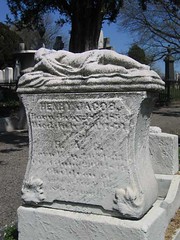
Jacob headstone Greenmount cemetery
Henry Jacob headstone; other photos
from Greenmount to be found here.

As time passes, places that were once conducive to solace stop working (the Baltimore Museum of Art was once a quiet place to visit, a bit off the beaten track, but it is no longer as cozy, a requirement for peace; Pimlico racetrack used to be a favored place as well, but all romance is gone). A few current favorites:
  • The pier southwest of Hendersons Wharf, on Fells Point: when the city is hot, so hot that it is impossible to get comfortable, I sit out on the harbor, away from the business side of the inn, to do a little bit of work, and catch the occasional breeze;


  • Saint Casimir church, on Canton square: the cathedral is especially beautiful during evening services in the wintertime, when the electric halo of Mary is lit, but it is also peaceful on hot summer days, cooled only by the whirr of electric fans;

Bodine's Greenmount cathedral
(Larger image to be found here.)
Perhaps my favorite place, however, is Greenmount cemetery, located in a troubled neighborhood in east Baltimore. Yet it's resolutely safe, peaceful, and beautiful; a wonderful place to walk, look, reflect, or read. I uploaded a few snaps from my visit on Saturday (I napped under a tree on the beautiful spring day), and include a few links to other pictures, including satellite imagery (plus directions!), courtesy of Google; A. Aubrey Bodine's exceptional photo of the gothic cathedral overlooking the graveyard [inset, right]; a second image of the cathedral in the snow from the Maryland Historical Society; and an 1848 print of the pastoral Green Mount cemetery gate and environs, number 182 of the Pratt's Cator Collection of Baltimore Views.

Labels: , ,